

Corbin expansion is a legacy being built by many hands
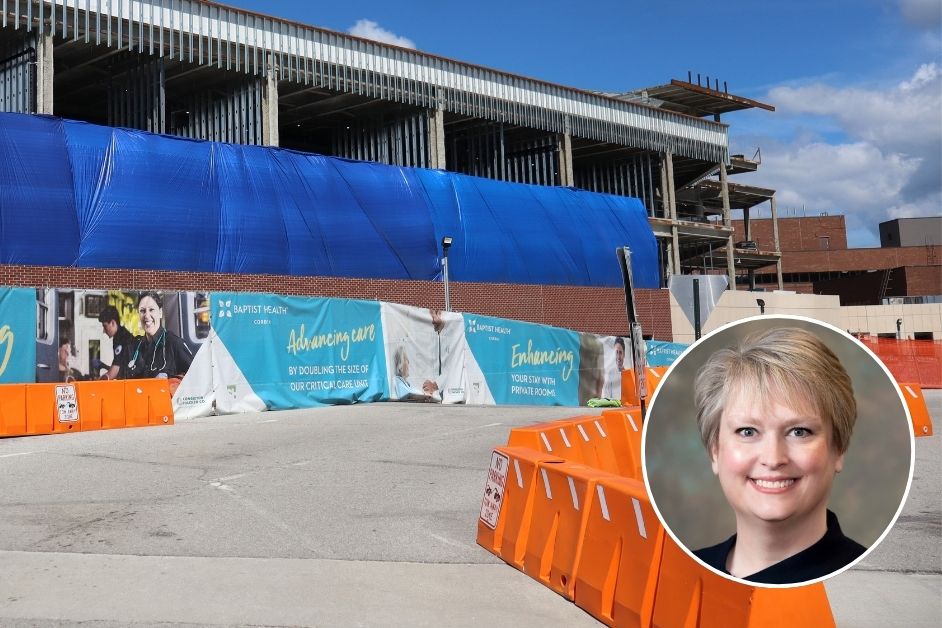
When Angelia Foster was named president of Baptist Health Corbin in 2024, she stepped into the role ready to listen.
She listened to patients who had waited too long in an Emergency Department built for a much smaller community. She heard from families who wanted privacy when a loved one was sick. She asked employees who had spent years working within the hospital’s limitations what they would do differently if those limitations were removed.
“I think every human being wants to be seen and heard and acknowledged,” Angelia said.
More than two years later, some of what she heard is taking shape in steel and concrete.
In June 2027, Baptist Health Corbin expects to complete its new Patient Care Wing, an 80,000-square-foot expansion that will reshape some of its most essential areas of care.
It is a significant investment in a hospital that has not seen an expansion of this magnitude in roughly 40 years. More importantly, it is an investment in the people who have been asking for it to grow.
“I want the community to know our job is to leave you a legacy,” Angelia said.
Baptist Health Corbin’s Emergency Department was built in 1986 to accommodate approximately 24,000 visits annually. Today, Angelia said, about 44,000 patients come through its doors each year.
Critical Care faces a similar squeeze, with its 10 beds full approximately 85% of the time. Baptist Health Corbin also remains the only Baptist Health hospital without predominantly private inpatient rooms.
The Patient Care Wing expansion is answering each of those needs.
The Emergency Department will nearly triple in size, from approximately 9,800 to 28,000 square feet, with capacity for as many as 60,000 visits annually. Critical Care will grow from 10 to 24 private rooms. Another 24 private inpatient rooms will be added. When Critical Care moves into the new wing, its former space will eventually become a significantly larger NICU.
Those changes will allow Baptist Health Corbin to better keep pace with a community that has long outgrown parts of its hospital. But spend a few minutes talking with Angelia about the project and the conversation does not stay on numbers for long. Her passion is most evident when she talks about the people behind them – the patients who will have more care available in their home community, the families who can stay close, and the employees who will have more room to do the work they have already been doing for years.
“I know that this will transform healthcare in this region,” she said. “I have no doubt.”
Perhaps that conviction comes, in part, from roots that run deeper than her few years at the helm of the hospital.
Her grandpa grew up about 20 minutes from Corbin, and her mother spent 30 years as a nurse. Both her mother and grandmother died in their 50s after, as Angelia emotionally describes it, spending too much of their lives putting their own needs last.
“My grandmother died at 56 because she didn’t take care of herself. My mother died at 54 because she didn’t take care of herself. I’m now 55.”
After the loss of her mother, Angelia turned her sights to a career in healthcare.
“I wanted in because I wanted to make it better for other families like ours,” she said.
Angelia often sees people who hesitate to seek care or place their own health behind the needs of everyone around them. She meets mothers who remind her of her own Mamaw and hears from families for whom transferring a loved one not only results in the emotional stress of separation, but the added burden of travel expenses and time away from work.
“I want us to say to them, ‘You matter. You matter as much as anyone else, we want your care to be exceptional, and we want you to trust us,” she said. “We’re here to take care of you so you can be there for your family for a very long time.’”
The people providing that care are also a priority in this expansion process.
With the average employee tenure being 14 years, there are decades of experience inside the hospital, but also relationships built over all those years together.
Angelia saw that before she ever accepted the job.
She recalls a story from her husband, who waited outside the hospital for her as she interviewed for her role. While observing a shift change, he saw one nurse crying, and several coworkers gathered around her. From what he could overhear, she was a new nurse who had just lost her first patient.
“They love each other,” he told Angelia.
When the young daughter of an employee needed cancer treatment in Cincinnati, coworkers raised $10,000 in four hours to help the family. They also donated 14 weeks of their own paid time off so their colleague could remain with her daughter.
“Watching them take care of each other makes me also want to take more care of them,” Angelia said.
Rather than just asking staff to adapt to a new, expanded space, Angelia has asked them to help determine how it should work. Five transformation teams are preparing departments for the move and giving frontline employees a voice in how care will change within the new spaces.
When Emergency Department employees pointed out that the hospital's single trauma bay was inadequate for a facility near Interstate 75, where a serious accident can send several patients through the doors at once, leadership went back to the data.
The new Emergency Department will have three trauma bays.
“I want the staff to know that we trust them to make the decisions because they’re the closest to the patient,” Angelia said. “They would be the ones taking care of my family.”
It is one piece of a much larger expansion, but it showcases the way Angelia believes change should happen. The people who know this hospital and community best should have a hand in shaping its future.
And they are.
As the Patient Care Wing expansion has risen, Angelia has watched physicians, businesses, community partners and families unite around it.
“The community has rallied around us like nothing I’ve ever seen,” Angelia said.
Perhaps that response should not be surprising in a place where she has already watched people give their money, time and even their own paid days off when someone else needed them.
“Just as we’re a family taking care of each other at the hospital, the community sees itself that way, too,” she said.
“To me, the community has just been waiting for us to give them an opening,” she continued. “The wing gave them an opening.”
What will be unveiled in summer 2027 might be one of the most tangible examples yet of the compassion people in this region show each day. It reflects an opportunity taken up by dozens of hands to make Baptist Health Corbin better for the next family who needs it, whether that is tomorrow or years from now.
“Leave everything you encounter better than you found it,” Angelia remembers her father saying.
Here, that philosophy feels less like advice than a way of life, now folded into this transformational project through employees speaking up, donors stepping forward and community partners investing in care that will serve people long after a single day’s work is done.
Angelia thinks about her own place in that future the same way.
“I’m only a placeholder, and this is so much bigger than me,” she said. “But what we do now can leave a legacy that takes care of the rest of the community for a long time.”
She listened to patients who had waited too long in an Emergency Department built for a much smaller community. She heard from families who wanted privacy when a loved one was sick. She asked employees who had spent years working within the hospital’s limitations what they would do differently if those limitations were removed.
“I think every human being wants to be seen and heard and acknowledged,” Angelia said.
More than two years later, some of what she heard is taking shape in steel and concrete.
In June 2027, Baptist Health Corbin expects to complete its new Patient Care Wing, an 80,000-square-foot expansion that will reshape some of its most essential areas of care.
It is a significant investment in a hospital that has not seen an expansion of this magnitude in roughly 40 years. More importantly, it is an investment in the people who have been asking for it to grow.
“I want the community to know our job is to leave you a legacy,” Angelia said.
Baptist Health Corbin’s Emergency Department was built in 1986 to accommodate approximately 24,000 visits annually. Today, Angelia said, about 44,000 patients come through its doors each year.
Critical Care faces a similar squeeze, with its 10 beds full approximately 85% of the time. Baptist Health Corbin also remains the only Baptist Health hospital without predominantly private inpatient rooms.
The Patient Care Wing expansion is answering each of those needs.
The Emergency Department will nearly triple in size, from approximately 9,800 to 28,000 square feet, with capacity for as many as 60,000 visits annually. Critical Care will grow from 10 to 24 private rooms. Another 24 private inpatient rooms will be added. When Critical Care moves into the new wing, its former space will eventually become a significantly larger NICU.
Those changes will allow Baptist Health Corbin to better keep pace with a community that has long outgrown parts of its hospital. But spend a few minutes talking with Angelia about the project and the conversation does not stay on numbers for long. Her passion is most evident when she talks about the people behind them – the patients who will have more care available in their home community, the families who can stay close, and the employees who will have more room to do the work they have already been doing for years.
“I know that this will transform healthcare in this region,” she said. “I have no doubt.”
Perhaps that conviction comes, in part, from roots that run deeper than her few years at the helm of the hospital.
Her grandpa grew up about 20 minutes from Corbin, and her mother spent 30 years as a nurse. Both her mother and grandmother died in their 50s after, as Angelia emotionally describes it, spending too much of their lives putting their own needs last.
“My grandmother died at 56 because she didn’t take care of herself. My mother died at 54 because she didn’t take care of herself. I’m now 55.”
After the loss of her mother, Angelia turned her sights to a career in healthcare.
“I wanted in because I wanted to make it better for other families like ours,” she said.
Angelia often sees people who hesitate to seek care or place their own health behind the needs of everyone around them. She meets mothers who remind her of her own Mamaw and hears from families for whom transferring a loved one not only results in the emotional stress of separation, but the added burden of travel expenses and time away from work.
“I want us to say to them, ‘You matter. You matter as much as anyone else, we want your care to be exceptional, and we want you to trust us,” she said. “We’re here to take care of you so you can be there for your family for a very long time.’”
The people providing that care are also a priority in this expansion process.
With the average employee tenure being 14 years, there are decades of experience inside the hospital, but also relationships built over all those years together.
Angelia saw that before she ever accepted the job.
She recalls a story from her husband, who waited outside the hospital for her as she interviewed for her role. While observing a shift change, he saw one nurse crying, and several coworkers gathered around her. From what he could overhear, she was a new nurse who had just lost her first patient.
“They love each other,” he told Angelia.
When the young daughter of an employee needed cancer treatment in Cincinnati, coworkers raised $10,000 in four hours to help the family. They also donated 14 weeks of their own paid time off so their colleague could remain with her daughter.
“Watching them take care of each other makes me also want to take more care of them,” Angelia said.
Rather than just asking staff to adapt to a new, expanded space, Angelia has asked them to help determine how it should work. Five transformation teams are preparing departments for the move and giving frontline employees a voice in how care will change within the new spaces.
When Emergency Department employees pointed out that the hospital's single trauma bay was inadequate for a facility near Interstate 75, where a serious accident can send several patients through the doors at once, leadership went back to the data.
The new Emergency Department will have three trauma bays.
“I want the staff to know that we trust them to make the decisions because they’re the closest to the patient,” Angelia said. “They would be the ones taking care of my family.”
It is one piece of a much larger expansion, but it showcases the way Angelia believes change should happen. The people who know this hospital and community best should have a hand in shaping its future.
And they are.
As the Patient Care Wing expansion has risen, Angelia has watched physicians, businesses, community partners and families unite around it.
“The community has rallied around us like nothing I’ve ever seen,” Angelia said.
Perhaps that response should not be surprising in a place where she has already watched people give their money, time and even their own paid days off when someone else needed them.
“Just as we’re a family taking care of each other at the hospital, the community sees itself that way, too,” she said.
“To me, the community has just been waiting for us to give them an opening,” she continued. “The wing gave them an opening.”
What will be unveiled in summer 2027 might be one of the most tangible examples yet of the compassion people in this region show each day. It reflects an opportunity taken up by dozens of hands to make Baptist Health Corbin better for the next family who needs it, whether that is tomorrow or years from now.
“Leave everything you encounter better than you found it,” Angelia remembers her father saying.
Here, that philosophy feels less like advice than a way of life, now folded into this transformational project through employees speaking up, donors stepping forward and community partners investing in care that will serve people long after a single day’s work is done.
Angelia thinks about her own place in that future the same way.
“I’m only a placeholder, and this is so much bigger than me,” she said. “But what we do now can leave a legacy that takes care of the rest of the community for a long time.”
“The community has rallied around us like nothing I’ve ever seen,”
The Dawn of a Healthier Tomorrow
Please consider partnering with us through the power of your advocacy and philanthropy. For information on how to donate, click the link below. You may also give us a call if you have questions.