

First Paducah patient reflects on technology now helping hundreds find answers
Christine Royère knew something was different the moment she met pulmonologist Keith Kelly, MD.
“I could understand everything he was saying,” she shared. “That’s rare.”
At 86 years old, Christine had experienced enough healthcare to recognize when a physician truly saw her – not just as someone who needed direction, but as an individual capable of understanding her own care. Dr. Kelly took the time to explain what he was seeing, what it meant and what her options were in a way that made sense.
That is why when he told her about an advanced procedure newly available at Baptist Health Paducah, and asked if she would be the first patient to undergo it with the help of donor-funded imaging technology, she didn’t hesitate.
“Let’s do it,” she said.
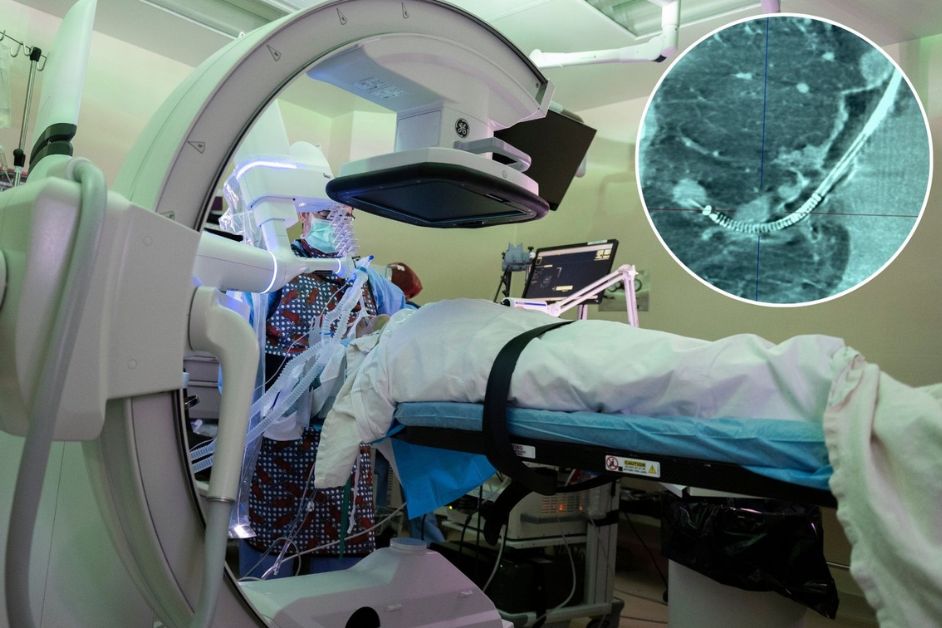
The procedure is called Ion robotic bronchoscopy. In simple terms, it helps physicians reach small, hard-to-access spots in the lungs without making an incision. The donor-funded fluoroscopic cone-beam CT C-arm adds live imaging during the procedure, giving Dr. Kelly another way to confirm he is in the right place before taking a biopsy.
Dr. Kelly often explains it like having a GPS inside the lungs. The technology helps guide him to the area of concern with more confidence and precision.
The idea of new technology wasn’t intimidating to Christine because Dr. Kelly made it understandable. She had followed the evolution of robotics and artificial intelligence in medicine and believed in where it was heading. What mattered most was that it was in the hands of someone she trusted.
That combination of innovation and compassion is exactly what Dr. Kelly and his team have worked to build. As a pulmonologist, he often meets patients after something concerning has been found in the lungs, but before they know what it is. His job is to help find answers, and for years, some of those answers required patients to leave Paducah.
“We were sending a lot of these patients out of town,” Dr. Kelly said. “And we knew there had to be a better way to take care of them right here.”
When the opportunity arose to bring Ion robotic bronchoscopy to Paducah, Dr. Kelly helped lead the charge, knowing it could fundamentally change what care looked like in this community. With the addition of the cone-beam CT C-arm, the team gained an even stronger tool to support the procedure.
Many lung nodules are small, deep in the lungs and difficult to reach. The more precisely a physician can access that area, the better chance they have of getting the tissue needed for an accurate diagnosis.
That means fewer repeat procedures, and more answers, sooner. It also translates into a dramatically different experience for patients like Christine.
“I had no recovery,” she said. “It was just easy.”
In a state where lung cancer has long been a devastating reality, early detection has historically been the exception, not the rule. With Ion robotic bronchoscopy and the added support of the cone-beam CT C-arm, more patients can be diagnosed earlier, when cancer may still be localized and treatable.
By December 2025, a milestone 500 patients had undergone robotic-assisted lung biopsies with the new technology at Baptist Health Paducah. By August 2026, that number had grown to more than 700.
“This is impacting people in our community every single day,” Dr. Kelly said. “We’re finding these cancers earlier, when we actually have a chance to do something about them.”
This was able to happen because Baptist Health Foundation Paducah donors believe their community deserves access to advanced care close to home. Their support helped bring the fluoroscopic cone-beam CT C-arm to Baptist Health Paducah, giving physicians like Dr. Kelly another tool to improve precision, strengthen diagnosis and change outcomes for patients facing the uncertainty of a possible lung cancer diagnosis.
“I have to thank the donors for helping make this possible,” he said. “No community our size would normally have access to something like this.”
Dr. Kelly often describes the program not as a single piece of equipment, but as an entire system built by a team of clinicians, caregivers and supporters all working toward the same goal.
Christine was willing to be first because she trusted the physician asking. After a lifetime of seeing medicine change, she believed in the work still ahead.
“As long as they keep doing their research and keep growing, I think it’s going to be amazing what they can do for people," she said.
“I could understand everything he was saying,” she shared. “That’s rare.”
At 86 years old, Christine had experienced enough healthcare to recognize when a physician truly saw her – not just as someone who needed direction, but as an individual capable of understanding her own care. Dr. Kelly took the time to explain what he was seeing, what it meant and what her options were in a way that made sense.
That is why when he told her about an advanced procedure newly available at Baptist Health Paducah, and asked if she would be the first patient to undergo it with the help of donor-funded imaging technology, she didn’t hesitate.
“Let’s do it,” she said.
The procedure is called Ion robotic bronchoscopy. In simple terms, it helps physicians reach small, hard-to-access spots in the lungs without making an incision. The donor-funded fluoroscopic cone-beam CT C-arm adds live imaging during the procedure, giving Dr. Kelly another way to confirm he is in the right place before taking a biopsy.
Dr. Kelly often explains it like having a GPS inside the lungs. The technology helps guide him to the area of concern with more confidence and precision.
The idea of new technology wasn’t intimidating to Christine because Dr. Kelly made it understandable. She had followed the evolution of robotics and artificial intelligence in medicine and believed in where it was heading. What mattered most was that it was in the hands of someone she trusted.
That combination of innovation and compassion is exactly what Dr. Kelly and his team have worked to build. As a pulmonologist, he often meets patients after something concerning has been found in the lungs, but before they know what it is. His job is to help find answers, and for years, some of those answers required patients to leave Paducah.
“We were sending a lot of these patients out of town,” Dr. Kelly said. “And we knew there had to be a better way to take care of them right here.”
When the opportunity arose to bring Ion robotic bronchoscopy to Paducah, Dr. Kelly helped lead the charge, knowing it could fundamentally change what care looked like in this community. With the addition of the cone-beam CT C-arm, the team gained an even stronger tool to support the procedure.
Many lung nodules are small, deep in the lungs and difficult to reach. The more precisely a physician can access that area, the better chance they have of getting the tissue needed for an accurate diagnosis.
That means fewer repeat procedures, and more answers, sooner. It also translates into a dramatically different experience for patients like Christine.
“I had no recovery,” she said. “It was just easy.”
In a state where lung cancer has long been a devastating reality, early detection has historically been the exception, not the rule. With Ion robotic bronchoscopy and the added support of the cone-beam CT C-arm, more patients can be diagnosed earlier, when cancer may still be localized and treatable.
By December 2025, a milestone 500 patients had undergone robotic-assisted lung biopsies with the new technology at Baptist Health Paducah. By August 2026, that number had grown to more than 700.
“This is impacting people in our community every single day,” Dr. Kelly said. “We’re finding these cancers earlier, when we actually have a chance to do something about them.”
This was able to happen because Baptist Health Foundation Paducah donors believe their community deserves access to advanced care close to home. Their support helped bring the fluoroscopic cone-beam CT C-arm to Baptist Health Paducah, giving physicians like Dr. Kelly another tool to improve precision, strengthen diagnosis and change outcomes for patients facing the uncertainty of a possible lung cancer diagnosis.
“I have to thank the donors for helping make this possible,” he said. “No community our size would normally have access to something like this.”
Dr. Kelly often describes the program not as a single piece of equipment, but as an entire system built by a team of clinicians, caregivers and supporters all working toward the same goal.
Christine was willing to be first because she trusted the physician asking. After a lifetime of seeing medicine change, she believed in the work still ahead.
“As long as they keep doing their research and keep growing, I think it’s going to be amazing what they can do for people," she said.
“This is impacting people in our community every single day. We’re finding these cancers earlier, when we actually have a chance to do something about them.”
The Dawn of a Healthier Tomorrow
Please consider partnering with us through the power of your advocacy and philanthropy. For information on how to donate, click the link below. You may also give us a call if you have questions.