

Paducah NICU gives 1-pound, 12-ounce baby a place to grow close to home
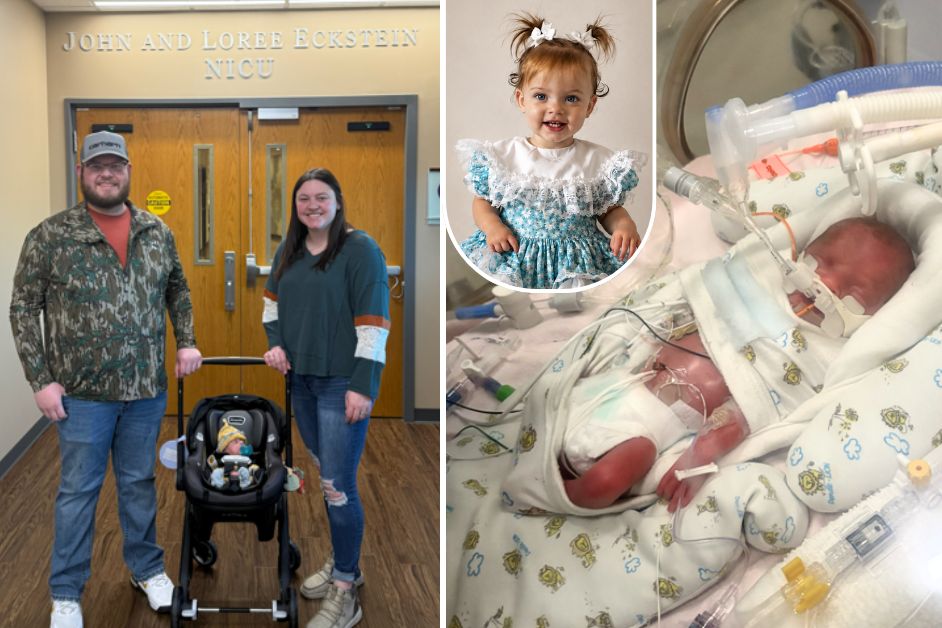
One pound, 12 ounces.
When Karley Benton woke up after an emergency C-section and asked how big her daughter was, the answer was difficult to comprehend.
“I was like, ‘There’s no way a baby that little can survive,’” Karley said. “That is teeny tiny.”
Lovett had arrived at just 26 weeks. Her eyes were still fused shut, while tubes and wires surrounded her inside an isolette in the John & Loree Eckstein NICU at Baptist Health Paducah.
Karley, 22 and a first-time mother, had no frame of reference for a baby so small.
“In my head, I thought, ‘Science hasn’t come that far,’” she said. “But little did I know it has.”
Karley and her husband had spent two years trying to become parents before she became pregnant. The pregnancy had been healthy, with no indication that Lovett would arrive so soon.
Near 26 weeks, Karley began spotting. She was evaluated and everything appeared normal. Two days later, worsening back pain brought her to Baptist Health Paducah.
“I was already four centimeters dilated and my water was about to break,” Karley remembered.
With Lovett arriving so early, Karley and her husband needed to know whether she could receive the care she needed in Paducah.
The answer came from neonatologist Edward O’Neill, MD.
“He came in, introduced himself to us, and said, ‘Listen, we’re going to be best friends by the end of this,’” Karley said.
He told her he believed Lovett could receive the care she needed there. If at any point that changed, he would not hesitate for her to be transferred.
“But until that point comes, she’s going to live right here in Paducah,” Karley remembered him saying.
The reassurance from Dr. O’Neill stuck with Karley, as did each intentional moment of care and compassion that followed.
Because Lovett was so premature and feet-first, Karley was taken for an emergency C-section. She recalls the patience of her anesthesiologist, who held her hand as they prepared for the surgery.
“I was terrified and he could tell,” she said. “I’ll never forget his kindness during one of the scariest moments of my life."
Lovett was born at 11:17 p.m. Before she was moved to the John & Vivian Williams Mother Baby Unit, the NICU staff asked Karley if she wanted to be the first person to see her daughter.
“That meant everything to me,” she said. “They understood that despite everything happening so unexpectedly, those first moments still mattered.”
Dr. O’Neill stayed closely connected to the family as Lovett’s care began. During Karley’s recovery, he came to her room with updates. Later, if he did not see Karley and her husband during one of their trips to the NICU, he called them. He explained tests, shared concerns, and made sure they understood each next step of their daughter’s care.
One day, while Karley was pumping breast milk, Dr. O’Neill noticed a container ready to go back to the NICU and offered to take it down for her himself.
“That spoke volumes,” she said. “No task was beneath him if it helped one of his patients."
Lovett was four days old before Karley and her husband could hold her.
“It always felt like such a burden to have to ask for help to hold your own baby, which isn’t something you ever think of whenever you’re pregnant,” Karley said. “But the nurses never made it feel that way. They always had time. They were always there.”
One of Karley’s favorite memories was walking into the NICU and finding Lovett getting extra cuddles from one of the nurses at their station.
“Knowing she wasn’t just being cared for medically, but genuinely loved, made leaving her each night just a little easier,” she said.
Lovett slowly needed less support. After two days on a ventilator, she transitioned to CPAP, then eventually to oxygen through a nasal cannula. She avoided brain bleeds and other major complications. She learned to maintain her temperature and eat. She grew.
“We had the smoothest NICU stay you could have ever had,” Karley said. “She was truly just a little miracle baby.”
The ability to make that entire journey in Paducah is part of what donor support has helped make possible.
Philanthropic support helped expand Baptist Health Paducah’s NICU in 2017, strengthening the hospital’s ability to care for some of western Kentucky’s smallest and most fragile patients. Donor gifts continue to provide vital resources and equipment for that care, including Panda warmers, bottle warmers and other tools used every day in the NICU.
Having a Level III NICU close to home meant Karley could recover from surgery without being separated from her newborn. After being discharged, she and her husband could spend time at the hospital, return home to shower or sleep, and come right back. Their parents, siblings, and extended family could be part of Lovett's progress, too.
“It made all the difference,” Karley said. “Being able to stay close allowed us to be present for Lovett every single day while also taking care of ourselves.”
On Lovett’s fourth day without dropping her heart rate – one of the last milestones keeping her in the NICU – Dr. O’Neill had hopeful news. If her heart rate remained stable for one more night, he would call the next morning and tell them to come get her.
Karley could joke about it, but she wasn’t ready to get her hopes up.
“She’s hardheaded,” she remembers thinking. “She’s going to do what she wants.”
The next morning, her phone rang.
“Are you ready to take your baby home today?” Dr. O’Neill asked.
“Yes,” Karley told him. “Yes, I am.”
Lovett left Baptist Health Paducah after 82 days, weighing just over four pounds. Her parents brought the NICU staff a care package and a cookie cake that read, “Peace out, NICU. I’m moving in with my parents.”
“A lot of her nurses talked about how that’s the smallest baby they’ve ever gotten to have and keep at Baptist,” Karley said. “None of them had really ever gotten to be a part of a baby’s journey from start to end in the NICU who was that little. I thought that was really cool.”
“Every single person played a part in our story – every nurse, therapist and staff member who cared for us over those 82 days,” she continued. “They saved our daughter’s life, and they taught us how to become parents during the hardest season of our own lives.”
The relationship with Dr. O’Neill continued beyond the NICU. His children sometimes play sports near Karley’s town, and when he stopped by the pizza shop owned by her brother during one of those trips, her brother bought his dinner.
“We still run into him quite a bit in public, and he always stops and talks,” Karley said. “He is truly a godsend.”
The baby Karley once could not imagine surviving is now a happy, healthy toddler, curious enough to help herself to vegetables straight from the family garden.
“She’s been released from all of her specialists,” Karley said. “She’s walking and running and doing all the things.”
Karley and her husband hope there may be more children in their future. If there are, she already knows where she wants to be.
“That was my biggest thing about picking Baptist in the first place, the Level III NICU," she said. "You never think you'll need it until you suddenly do. Time does matter. There's no question about where I would choose to deliver again."
When Karley Benton woke up after an emergency C-section and asked how big her daughter was, the answer was difficult to comprehend.
“I was like, ‘There’s no way a baby that little can survive,’” Karley said. “That is teeny tiny.”
Lovett had arrived at just 26 weeks. Her eyes were still fused shut, while tubes and wires surrounded her inside an isolette in the John & Loree Eckstein NICU at Baptist Health Paducah.
Karley, 22 and a first-time mother, had no frame of reference for a baby so small.
“In my head, I thought, ‘Science hasn’t come that far,’” she said. “But little did I know it has.”
Karley and her husband had spent two years trying to become parents before she became pregnant. The pregnancy had been healthy, with no indication that Lovett would arrive so soon.
Near 26 weeks, Karley began spotting. She was evaluated and everything appeared normal. Two days later, worsening back pain brought her to Baptist Health Paducah.
“I was already four centimeters dilated and my water was about to break,” Karley remembered.
With Lovett arriving so early, Karley and her husband needed to know whether she could receive the care she needed in Paducah.
The answer came from neonatologist Edward O’Neill, MD.
“He came in, introduced himself to us, and said, ‘Listen, we’re going to be best friends by the end of this,’” Karley said.
He told her he believed Lovett could receive the care she needed there. If at any point that changed, he would not hesitate for her to be transferred.
“But until that point comes, she’s going to live right here in Paducah,” Karley remembered him saying.
The reassurance from Dr. O’Neill stuck with Karley, as did each intentional moment of care and compassion that followed.
Because Lovett was so premature and feet-first, Karley was taken for an emergency C-section. She recalls the patience of her anesthesiologist, who held her hand as they prepared for the surgery.
“I was terrified and he could tell,” she said. “I’ll never forget his kindness during one of the scariest moments of my life."
Lovett was born at 11:17 p.m. Before she was moved to the John & Vivian Williams Mother Baby Unit, the NICU staff asked Karley if she wanted to be the first person to see her daughter.
“That meant everything to me,” she said. “They understood that despite everything happening so unexpectedly, those first moments still mattered.”
Dr. O’Neill stayed closely connected to the family as Lovett’s care began. During Karley’s recovery, he came to her room with updates. Later, if he did not see Karley and her husband during one of their trips to the NICU, he called them. He explained tests, shared concerns, and made sure they understood each next step of their daughter’s care.
One day, while Karley was pumping breast milk, Dr. O’Neill noticed a container ready to go back to the NICU and offered to take it down for her himself.
“That spoke volumes,” she said. “No task was beneath him if it helped one of his patients."
Lovett was four days old before Karley and her husband could hold her.
“It always felt like such a burden to have to ask for help to hold your own baby, which isn’t something you ever think of whenever you’re pregnant,” Karley said. “But the nurses never made it feel that way. They always had time. They were always there.”
One of Karley’s favorite memories was walking into the NICU and finding Lovett getting extra cuddles from one of the nurses at their station.
“Knowing she wasn’t just being cared for medically, but genuinely loved, made leaving her each night just a little easier,” she said.
Lovett slowly needed less support. After two days on a ventilator, she transitioned to CPAP, then eventually to oxygen through a nasal cannula. She avoided brain bleeds and other major complications. She learned to maintain her temperature and eat. She grew.
“We had the smoothest NICU stay you could have ever had,” Karley said. “She was truly just a little miracle baby.”
The ability to make that entire journey in Paducah is part of what donor support has helped make possible.
Philanthropic support helped expand Baptist Health Paducah’s NICU in 2017, strengthening the hospital’s ability to care for some of western Kentucky’s smallest and most fragile patients. Donor gifts continue to provide vital resources and equipment for that care, including Panda warmers, bottle warmers and other tools used every day in the NICU.
Having a Level III NICU close to home meant Karley could recover from surgery without being separated from her newborn. After being discharged, she and her husband could spend time at the hospital, return home to shower or sleep, and come right back. Their parents, siblings, and extended family could be part of Lovett's progress, too.
“It made all the difference,” Karley said. “Being able to stay close allowed us to be present for Lovett every single day while also taking care of ourselves.”
On Lovett’s fourth day without dropping her heart rate – one of the last milestones keeping her in the NICU – Dr. O’Neill had hopeful news. If her heart rate remained stable for one more night, he would call the next morning and tell them to come get her.
Karley could joke about it, but she wasn’t ready to get her hopes up.
“She’s hardheaded,” she remembers thinking. “She’s going to do what she wants.”
The next morning, her phone rang.
“Are you ready to take your baby home today?” Dr. O’Neill asked.
“Yes,” Karley told him. “Yes, I am.”
Lovett left Baptist Health Paducah after 82 days, weighing just over four pounds. Her parents brought the NICU staff a care package and a cookie cake that read, “Peace out, NICU. I’m moving in with my parents.”
“A lot of her nurses talked about how that’s the smallest baby they’ve ever gotten to have and keep at Baptist,” Karley said. “None of them had really ever gotten to be a part of a baby’s journey from start to end in the NICU who was that little. I thought that was really cool.”
“Every single person played a part in our story – every nurse, therapist and staff member who cared for us over those 82 days,” she continued. “They saved our daughter’s life, and they taught us how to become parents during the hardest season of our own lives.”
The relationship with Dr. O’Neill continued beyond the NICU. His children sometimes play sports near Karley’s town, and when he stopped by the pizza shop owned by her brother during one of those trips, her brother bought his dinner.
“We still run into him quite a bit in public, and he always stops and talks,” Karley said. “He is truly a godsend.”
The baby Karley once could not imagine surviving is now a happy, healthy toddler, curious enough to help herself to vegetables straight from the family garden.
“She’s been released from all of her specialists,” Karley said. “She’s walking and running and doing all the things.”
Karley and her husband hope there may be more children in their future. If there are, she already knows where she wants to be.
“That was my biggest thing about picking Baptist in the first place, the Level III NICU," she said. "You never think you'll need it until you suddenly do. Time does matter. There's no question about where I would choose to deliver again."
“Being able to stay close allowed us to be present for Lovett every single day while also taking care of ourselves.”
The Dawn of a Healthier Tomorrow
Please consider partnering with us through the power of your advocacy and philanthropy. For information on how to donate, click the link below. You may also give us a call if you have questions.