

Mobile clinic removing barriers to behavioral health in Richmond area
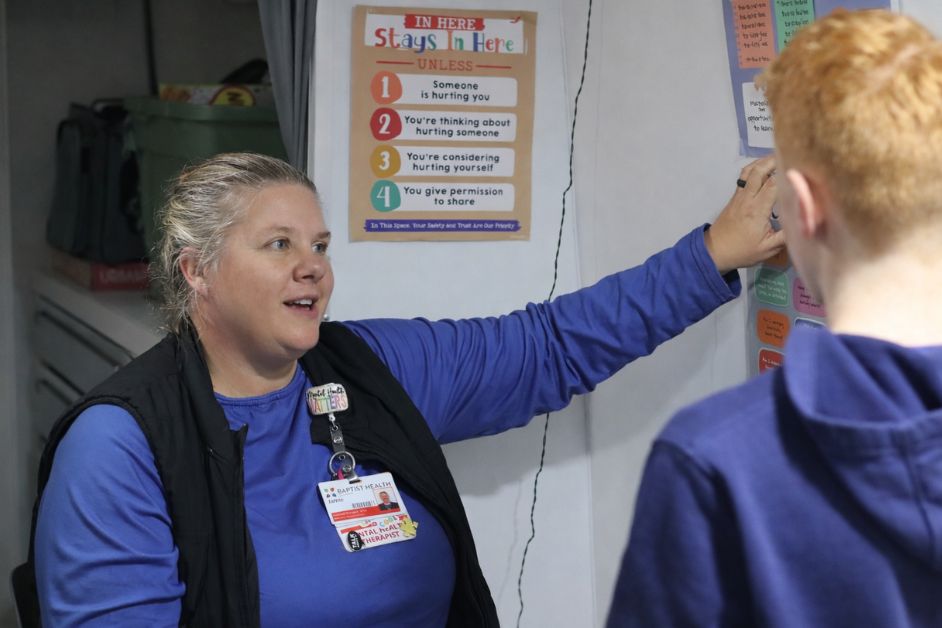
Jamie Waddle understands the people she serves because her story begins in a place much like theirs.
Growing up in eastern Kentucky, she learned early what it means to live in a close-knit community, where neighbors take care of each other, but often keep their struggles to themselves. That understanding now shapes her work as a behavioral health therapist with the mobile healthcare clinic for Baptist Health Medical Group in Richmond, where she brings care directly to students who might otherwise go without it.
"It just means so much that we’re offering this space – this ability to meet students where they are,” Jamie shared.
Jamie has spent more than 20 years working with children and families. Before becoming a licensed professional clinical counselor, she worked as a case manager, providing in-home services to help families stay together and build healthier routines. Five years ago, she returned to school to earn her clinical degree, continuing what she describes as a lifelong calling to help children grow and develop skills they can carry into adulthood.
That calling is now on wheels.
Thanks to the generosity of donors to Baptist Health Foundation, the behavioral health mobile clinic travels between local schools, offering students a safe, private space outside the classroom where they can talk openly about their thoughts, emotions and experiences. The donor-funded vehicle removes one of the biggest barriers to care – transportation – allowing students to receive support without missing activities.
“Through this behavioral health mobile clinic, students don’t have to figure out where to go or how to get there,” Jamie explained. “We bring the care to them.”
For many students, this access makes all the difference. Jamie provides trauma-informed care using evidence-based approaches like cognitive behavioral therapy, Eye Movement Desensitization and Reprocessing (EMDR) and social-emotional regulation skills. These services help students learn how to identify emotions, manage stress, process trauma and build healthy coping strategies – skills that can shape the rest of their lives.
Starting that support early matters.
“Beginning mental health care at a young age helps students build skills they can rely on later,” Jamie explained. “When life gets stressful or difficult, they already have tools in place. They just keep building on them.”
Working in rural communities, Jamie knows that asking for help isn’t always easy. Many students may not feel comfortable speaking up or may not believe support is available to them at all. The mobile clinic changes that reality, showing students that someone is willing to come to them and listen.
Knowing local donors are prioritizing mental health resources means everything to Jamie.
“It’s wonderful to know people want to provide these services and invest in the youth of their community because they’re the ones who will build that community in the future,” she said.
With continued support, the impact of the mobile clinic could expand – more days in schools, more students served and wider access to care at a pivotal time for young people.
The results are already evident.
“The kids aren’t scared to come out here. They’re ready to talk. They feel safe. And that’s because someone cared enough to make this possible.”
Growing up in eastern Kentucky, she learned early what it means to live in a close-knit community, where neighbors take care of each other, but often keep their struggles to themselves. That understanding now shapes her work as a behavioral health therapist with the mobile healthcare clinic for Baptist Health Medical Group in Richmond, where she brings care directly to students who might otherwise go without it.
"It just means so much that we’re offering this space – this ability to meet students where they are,” Jamie shared.
Jamie has spent more than 20 years working with children and families. Before becoming a licensed professional clinical counselor, she worked as a case manager, providing in-home services to help families stay together and build healthier routines. Five years ago, she returned to school to earn her clinical degree, continuing what she describes as a lifelong calling to help children grow and develop skills they can carry into adulthood.
That calling is now on wheels.
Thanks to the generosity of donors to Baptist Health Foundation, the behavioral health mobile clinic travels between local schools, offering students a safe, private space outside the classroom where they can talk openly about their thoughts, emotions and experiences. The donor-funded vehicle removes one of the biggest barriers to care – transportation – allowing students to receive support without missing activities.
“Through this behavioral health mobile clinic, students don’t have to figure out where to go or how to get there,” Jamie explained. “We bring the care to them.”
For many students, this access makes all the difference. Jamie provides trauma-informed care using evidence-based approaches like cognitive behavioral therapy, Eye Movement Desensitization and Reprocessing (EMDR) and social-emotional regulation skills. These services help students learn how to identify emotions, manage stress, process trauma and build healthy coping strategies – skills that can shape the rest of their lives.
Starting that support early matters.
“Beginning mental health care at a young age helps students build skills they can rely on later,” Jamie explained. “When life gets stressful or difficult, they already have tools in place. They just keep building on them.”
Working in rural communities, Jamie knows that asking for help isn’t always easy. Many students may not feel comfortable speaking up or may not believe support is available to them at all. The mobile clinic changes that reality, showing students that someone is willing to come to them and listen.
Knowing local donors are prioritizing mental health resources means everything to Jamie.
“It’s wonderful to know people want to provide these services and invest in the youth of their community because they’re the ones who will build that community in the future,” she said.
With continued support, the impact of the mobile clinic could expand – more days in schools, more students served and wider access to care at a pivotal time for young people.
The results are already evident.
“The kids aren’t scared to come out here. They’re ready to talk. They feel safe. And that’s because someone cared enough to make this possible.”
“It’s wonderful to know people want to provide these services and invest in the youth of their community because they’re the ones who will build that community in the future,”
The Dawn of a Healthier Tomorrow
Please consider partnering with us through the power of your advocacy and philanthropy. For information on how to donate, click the link below. You may also give us a call if you have questions.